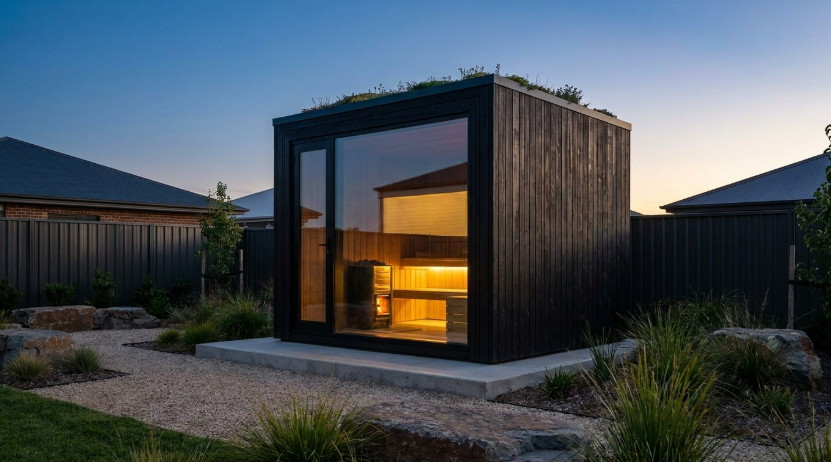
Electric heaters reach 170 to 190 degrees Fahrenheit in 45 minutes to an hour and need a dedicated 240V circuit, while wood-fired heaters take 60 to 90 minutes, burn about a bushel of hardwood per session, and need a chimney and extra clearance from structures. Electric suits convenience and proximity to a house. Wood suits a detached cabin and a slower, more hands-on ritual.
1. Installation: New Wiring vs a Chimney
Electric heaters need a dedicated 240V circuit sized to the unit, typically 6 to 9 kW for a 4 to 6 person cabin, which means an electrician running new wire from the panel. Wood-fired heaters skip the electrical work but require a proper chimney penetration through the roof or wall, with clearances from combustible materials set by local code. Which one is more work depends on your situation. A cabin close to the house often makes electrical wiring the easier path, while a detached cabin in the yard makes a chimney installation more practical.
See also: Okay, So You Have A Swiss Chems Tab Open. Let’s Talk About That.
2. Heat-Up Time and Control
Electric heaters bring a cabin to 170 to 190 degrees in roughly 45 minutes to an hour, and hold that temperature automatically with a thermostat, so you can set a timer and walk in right when it’s ready. Wood-fired heaters typically take 60 to 90 minutes and need active tending, adding logs and adjusting the damper to keep temperature climbing steadily. Some owners consider that tending part of the appeal. Others find it one more chore on a weeknight when time is tight.
3. Where You Can Put It
Electric cabins can sit close to a house, garage, or existing structure, since there’s no open flame or chimney to keep clear of nearby walls. Wood-fired cabins generally need to sit farther from the house, both for chimney clearance and because the smell of wood smoke travels. This makes wood-fired heat a more natural fit for a larger property with room for a freestanding cabin away from windows and doors.
4. Fuel and Running Costs
Electric heaters running three to four sessions a week typically add $30 to $70 a month to an electric bill depending on rates and climate. Wood-fired heaters shift that cost to fuel: a one to two hour session burns roughly a bushel of dry, seasoned hardwood, so owners who burn several sessions a week need storage space for wood that’s been drying for at least six months. If you already have a reliable, cheap source of seasoned hardwood, wood heat can end up cheaper. If you’re buying kiln-dried wood by the bundle, electric often wins on cost.
5. The Steam Experience
Both heater types warm a bed of stones, usually 40 to 50 pounds for a proper heat bank, and both produce löyly steam when water hits the hot stones. The steam itself doesn’t differ meaningfully between the two. What differs is the ritual around it: an electric heater lets you dial in a consistent temperature session after session, while a wood stove’s heat curve varies a bit with how the fire is burning, which some sauna traditionalists actually prefer.
6. Upfront and Long-Term Cost
Sticker prices for the heater itself are often comparable between electric and wood-fired units in a similar output range. The bigger cost swing comes from installation: electrical work commonly runs $500 to $1,500, while a proper chimney kit and installation can land in a similar range or higher depending on roof or wall penetration complexity. It pays to get quotes for both before deciding, since the “cheaper” option on paper can flip once installation is priced out. Shoppers weighing both heater types side by side sometimes start with one specialty retailer that lists electric and wood-fired cabins together with clearance and wiring requirements spelled out, which makes the comparison easier before committing to a contractor quote.
What About Noise and Smell?
Electric heaters run essentially silent aside from a faint hum from the thermostat cycling on and off, and there’s no odor beyond the wood paneling itself warming up. A wood-fired stove crackles and pops as it burns, which many owners count as part of the atmosphere, and the smell of wood smoke lingers on skin and hair after a session in a way electric heat doesn’t produce. Neither is objectively better here. It comes down to whether you want the sauna to feel like a quiet appliance or a small cabin fire you’re sitting next to.
Which One Should You Actually Choose?
If your cabin sits close to the house and convenience matters most on a weeknight, electric heat is the lower-friction choice. If you have a detached spot in the yard, access to seasoned hardwood, and enjoy the process of tending a fire, wood heat delivers an experience that plenty of long-time sauna owners consider worth the extra effort. Neither choice affects the wellness case for sauna use itself. Consistent use several times a week is the variable tied to the cardiovascular associations in the research, not which heat source got you there.
Does Climate Change the Calculation?
In a cold-winter region, electric heaters generally hold up better against the elements since there’s no chimney draft to fight when outdoor air is bitterly cold, and a thermostat compensates automatically for the bigger temperature gap. Wood-fired heaters can also work fine in cold climates, but the stove has to work harder and burn more wood per session as outdoor temperatures drop, so owners in genuinely cold regions should budget for higher fuel use through the winter months than the same cabin would need in a milder climate. Either heater type benefits from a well-insulated cabin shell regardless of climate, since insulation quality affects both fuel and electricity costs more than the heat source itself does.
Frequently Asked Questions
Is a wood-fired cabin sauna cheaper than an electric one?
The heater itself is often similarly priced, but wood-fired models can skip the cost of running a new 240V circuit, which frequently saves $500 to $1,500. Ongoing fuel cost depends on whether you’re buying or sourcing your own hardwood.
Which heats up faster, electric or wood?
Electric heaters generally reach 170 to 190 degrees Fahrenheit in 45 minutes to an hour with consistent, controllable output. Wood-fired heaters typically take 60 to 90 minutes and require attention to keep the fire at the right intensity.
Can I put a wood-fired cabin sauna near my house?
Most local codes require additional clearance from structures for a chimney and combustion source compared to an electric unit, so wood-fired cabins are more commonly sited as a detached structure farther from the house.
Does electric heat produce the same steam as a wood stove?
Yes, both heat a bed of stones that produces löyly steam when water is added, so the steam experience is similar. The difference is mainly in how the heat is generated and controlled, not in the stones themselves.
How much wood does a wood-fired cabin sauna use per session?
A typical one to two hour session burns roughly a bushel of dry, seasoned hardwood. Owners who burn several sessions a week should plan storage for wood that has dried for at least six months.
References
- Cardiovascular and Other Health Benefits of Sauna Bathing: A Review of the Evidence, Mayo Clinic Proceedings, 2018
- Benefits and risks of sauna bathing, The American Journal of Medicine, 2001
- Clinical Effects of Regular Dry Sauna Bathing: A Systematic Review, Evidence-Based Complementary and Alternative Medicine, 2018
- National Fire Protection Association, chimney and clearance standards
By Sandra Kessler