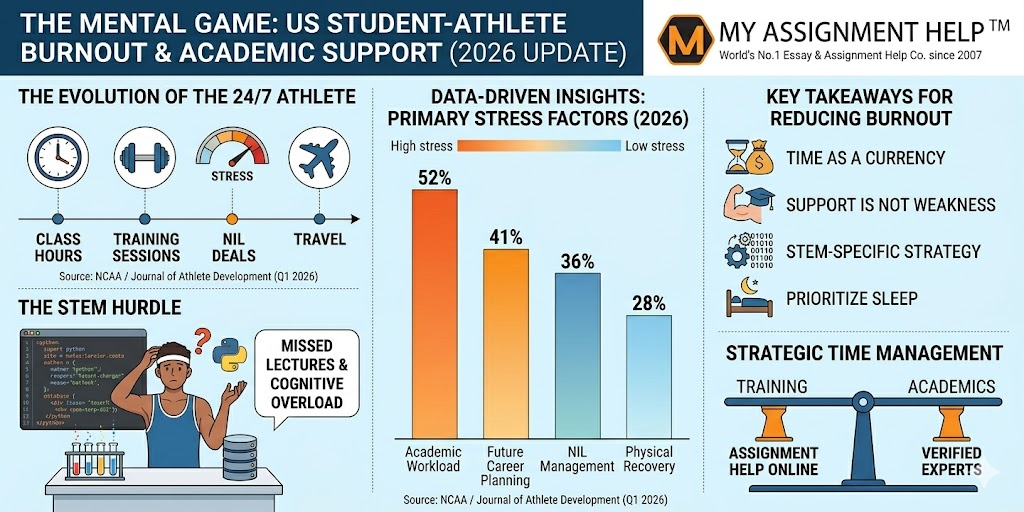
In the high-stakes arena of American collegiate sports, the “grind” is often glorified. However, beneath the surface of highlight reels and sold-out stadiums, a quiet crisis is unfolding. As we progress through the 2026 academic year, the pressure on student-athletes has reached an inflection point. It is no longer just about physical conditioning; it is about cognitive endurance.
Recent data from the NCAA Student-Athlete Health & Wellness Study (Q1 2026) indicates that nearly 30% of student-athletes report feeling mentally exhausted “constantly” or “most every day.” This exhaustion isn’t stemming solely from the field—it’s the result of a grueling “double-life” where academic rigor must match athletic output to maintain eligibility under strict university standards and the evolving 2026 TEQSA-aligned frameworks often mirrored in global academic policy.
The Evolution of the “24/7 Athlete”
The traditional image of the student-athlete has shifted. With the rise of Name, Image, and Likeness (NIL) deals and the professionalization of Division I programs, students are essentially managing a full-time career alongside a full-time degree. For many, the mental load of maintaining a high GPA—necessary for both athletic eligibility and future career security—becomes a primary stressor.
When a student-athlete is faced with a 2,000-word research paper after an 8-hour travel day for an away game, the risk of burnout spikes. This is exactly why many are now seeking assignment help online as a strategic tool for time management. By outsourcing the foundational research and structural drafting of complex papers, athletes can preserve their mental “bandwidth” for both their sport and their high-level exams. This shift toward “academic delegation” allows students to focus on mastery rather than just survival, ensuring they meet the high standards expected in the US education system.
The STEM Hurdle: Why Coding is the New “Two-A-Day”
The burnout crisis is particularly acute for student-athletes pursuing STEM (Science, Technology, Engineering, and Math) degrees. A 2026 report in the Journal of Athlete Development highlighted that STEM-focused athletes miss up to 40% of their lab-based lectures due to mid-week competition schedules and travel.
For a student majoring in Computer Science or Data Analytics, missing a single lecture on back-end architecture or Python algorithms can be catastrophic. The cognitive load required to “self-teach” complex syntax while recovering from physical exertion is often the breaking point. Consequently, there is a growing trend among tech-savvy athletes to programming assignment help support. This isn’t about avoiding the work; it’s about accessing expert-led walkthroughs and debugged code structures that act as a supplemental educational resource. In the competitive US tech market, having a functional codebase and a deep understanding of the logic is more important than struggling in isolation.
Data-Driven Insights: The Burnout Statistics (2026)
To understand the gravity of the situation, we must look at the primary stressors reported by student-athletes across the USA in early 2026. The shift toward digital literacy and higher regulatory standards has changed the landscape significantly.
| Primary Stress Factor | % of Athletes Reporting Negative Impact (2026) |
| Academic Workload & Deadlines | 52% |
| Future Career Planning & Tech Skills | 41% |
| NIL Management & Financial Pressure | 36% |
| Physical Injury Recovery & Rehab | 28% |
Strategic Time Management for the Modern Athlete
The solution to burnout isn’t working harder; it’s working smarter. Professional athletes have coaches for every aspect of their lives—strength, nutrition, and mental performance. Academics should be no different. Utilizing high-authority educational resources allows a student to bridge the gap between their training schedule and their degree requirements. Whether it is seeking a second pair of eyes for a literature review or getting a code audit for a software project, these interventions are becoming standard practice for the elite student-athlete.
Key Takeaways
- Time as a Currency: Treat your time like a bank account. High-intensity training and high-stakes academics are both “withdrawals.”
- Support is Not Weakness: Utilizing professional academic resources is a form of strategic delegation used by high-performers to maintain a high GPA.
- Technical Support: For those in CS or engineering, getting specialized coding help early can prevent the “midterm pile-up” that leads to athletic benching.
- Verification Matters: Always ensure the support you receive is from verified experts who understand 2026 academic standards.
See also: Crypto Business Opportunities
Frequently Asked Questions (FAQ)
1. Does using academic support services affect NCAA eligibility?
Using tutoring and research resources is a standard part of student life. As long as the student uses these tools as educational aids to improve their own understanding and ensures the final work is their own, it is a legitimate study strategy.
2. Why is programming help specifically in high demand for athletes?
Programming assignments are uniquely time-consuming. A single bug can take hours to fix—time an athlete simply doesn’t have during the season. Seeking a “pay for programming assignment” service provides a clear, debugged path to learning.
3. How can I identify burnout before it affects my performance?
Look for “staleness”: chronic fatigue, irritability, and a sudden drop in academic interest. If a single weekend of rest doesn’t fix it, it’s likely burnout.
Author Bio
Dr. Marcus Sterling
Dr. Sterling is a Senior Content Strategist at MyAssignmentHelp with a PhD in Educational Psychology. He specializes in student-athlete advocacy and the integration of data-driven academic support to meet 2026 university standards. All his research and contributions are ID and degree verified to ensure the highest level of expertise and authoritativeness in the academic field.