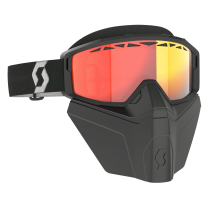
Most riders spend serious time picking the right sled. Then they grab whatever goggles are on sale and call it a day. That’s a mistake that shows up fast once you’re out on the trail. Canada’s winter riding conditions are not forgiving. You get flat light in Northern Ontario, blinding sun glare in the Rockies, and near-zero visibility on the prairies during a ground blizzard. The wrong goggles can turn a great ride into a dangerous one, fast. Here is what you need to know before you buy snowmobile goggles in Canada.
Lens Tint Is Not Just a Style Choice
The tint you choose should match the light conditions you ride in most. This is probably the single biggest factor riders get wrong.
- Yellow or amber lenses are useful for contrast on overcast days.
- Smoke or dark lenses are useful for bright sun days, especially if you ski at high elevations where snow glare is a big problem.
- If you ski in very low light, especially at night, then clear lenses are the way to go. This is true whether you are shopping for snowmobile goggles in Canada or alpine ski goggles.
- Photochromic lenses are lenses that change automatically. They are more expensive, but if you ski in a variety of conditions, they are well worth the extra money.
If you ski in the woods of northern Canada, where the light changes constantly, then a mid-range amber lens is a safe bet.
Anti-Fog Performance in Canadian Cold
This subject gets less attention than it deserves. Take a break, goggles fog up, and then you ski around half-blind on a groomed course. That’s not a minor annoyance. That’s a safety issue.
Look for double-lens construction. The two layers create a thermal barrier that reduces condensation on the inner surface. Single-lens goggles fog more easily, especially in the kind of sustained cold that Canadian riding regularly produces.
Venting matters too. Good goggles have top and bottom vents that draw air through and push moisture out. Check that the vents stay clear when you’re wearing a balaclava, because trapped warm air has to go somewhere.
Some goggles include an anti-fog coating on the inner lens. These help, but they wear down over time, especially if you wipe the inner surface with your glove. Try to avoid touching the inside of the lens.
Helmet Compatibility
Here’s something that trips people up. Goggles and helmets are sold separately, but they have to work together. A gap between your helmet brim and the top of the goggle frame lets cold air channel directly to your forehead. On a long day in minus twenty, that adds up quickly.
Before buying, check whether the goggles are rated OTG (over the glasses) compatible or fit-tested with your specific helmet brand. Many helmet manufacturers publish lists of goggle models that pair well with their designs.
The frame also needs to seal against your face properly. A flat face profile and a contoured goggle frame don’t always get along. If you can, try them on together before committing.
See also: Crypto Business Opportunities
UV Protection Is a Winter Issue Too
Most people think UV exposure is a summer concern. It isn’t. Snow reflects up to 80 percent of UV radiation, according to the World Health Organization. At higher elevations, that number increases further.
Riding without proper UV protection can cause photokeratitis, which is a sunburn on the surface of your eyes. It’s temporary, but it’s painful and can affect your vision for a day or two after exposure.
When shopping for goggles, look for ones that are rated as meeting ANSI Z87.1 or CE EN 174 for UV protection. This will ensure that the lens actually blocks UV rays, not just visible light. A lens may appear dark and still fail to block UV rays if it is not rated.
Frame and Foam Quality
The outer frame is subjected to some serious abuse. It bends in cold temperatures, is beaten around on technical trails, and in the worst-case scenario, it may be subjected to a direct impact if you go down. A frame that cracks in the cold is a problem you don’t want to deal with mid-ride.
Look for a triple-layer foam construction that features a moisture-wicking fabric. This type of construction will stick to your face better and deal with sweat better. The cheaper foams compress rapidly and fail within a season or two.
When to Replace Your Goggles
A number of riders wear goggles for a long time. Scratched lenses scatter light in ways that make it harder to read terrain. A cracked frame or degraded foam seal means you’re not getting the protection the goggle was built to provide.
If the inner anti-fog coating is visibly worn or the lens has deep scratches, replace it. Some brands sell replacement lenses separately, which is a more cost-effective option than buying a full new pair.
Goggles that looked fine in the garage can perform very differently at minus fifteen with wind in your face. It’s worth a second look before the season starts.